How Businesses Can Automate Repetitive Tasks Using Software and AI
Discover how businesses can use software automation and artificial intelligence to reduce repetitive work, improve operational efficiency, minimize errors, and create smarter business workflows in 2026.
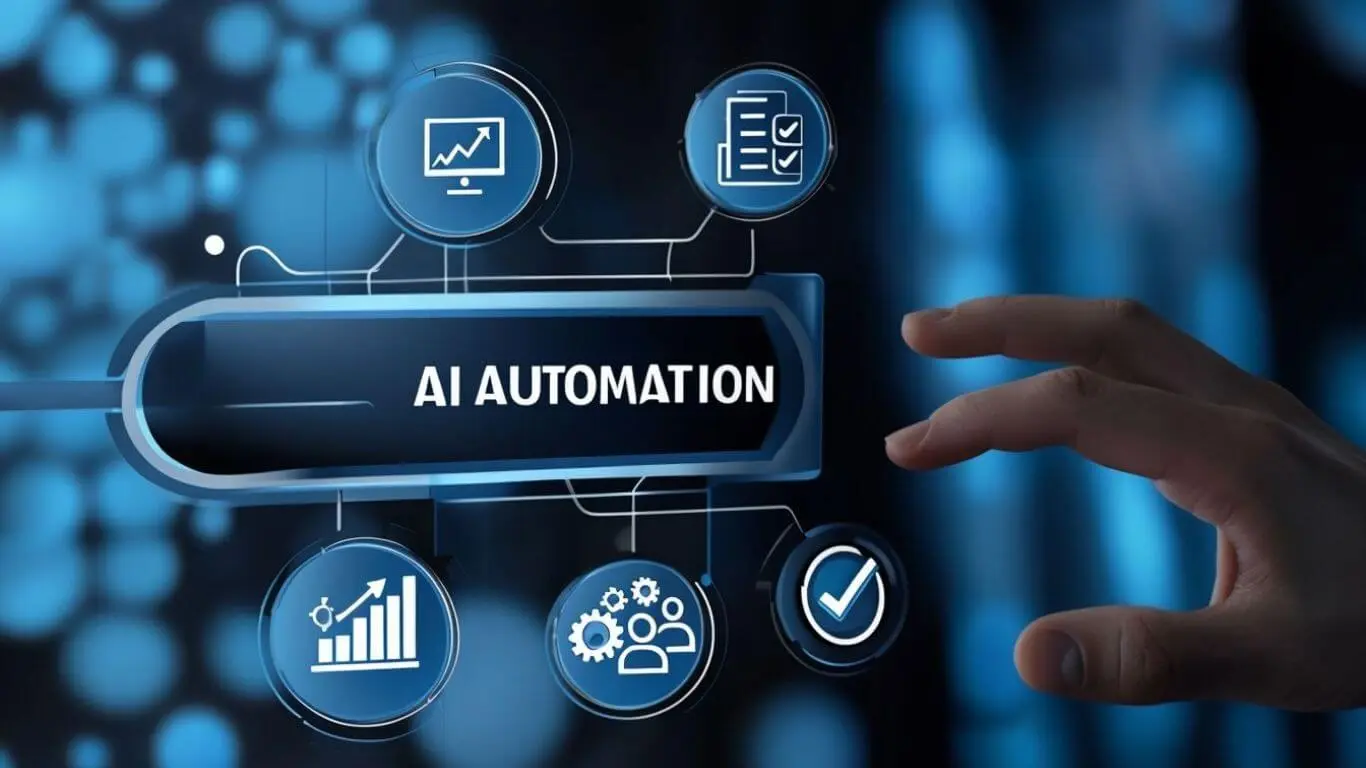
“Businesses across industries perform hundreds of repetitive tasks every day, from entering customer information and processing enquiries to generating reports, sending notifications, updating records, and managing routine administrative workflows. When these activities are handled manually, they can consume valuable employee time, increase operational costs, and create opportunities for human error. Modern software automation and artificial intelligence can help businesses transform these repetitive processes into faster and more reliable digital workflows. By connecting business applications, databases, communication platforms, and AI-powered systems, organizations can automate routine activities while allowing employees to focus on more strategic and creative responsibilities. This guide explains how business automation works, which tasks can be automated, how AI enhances automation, and how organizations can plan an effective automation strategy.”
What is Business Process Automation?
Business process automation is the use of software and digital technologies to perform repetitive business activities with minimal manual intervention. Instead of employees repeatedly completing the same tasks, automated workflows can execute predefined actions when specific events or conditions occur.
Automation can be implemented across departments including sales, marketing, finance, customer support, human resources, operations, and administration. The objective is not simply to replace manual work but to create faster, more consistent, and measurable business processes.
Technical Takeaways
Why Businesses Should Automate Repetitive Tasks
Repetitive tasks can consume significant amounts of employee time even when each individual activity appears simple. Over weeks and months, manually processing forms, updating records, generating reports, and sending routine communications can become a major operational burden.
Automation allows employees to spend less time on repetitive activities and more time on customer relationships, decision-making, innovation, and other high-value responsibilities.
Technical Takeaways
Common Business Tasks That Can Be Automated
Many routine processes are suitable for automation when they follow predictable rules or involve structured information. Businesses can identify repetitive workflows across departments and determine which activities can be automated safely and efficiently.
Common examples include lead management, appointment reminders, invoice processing, report generation, customer notifications, data synchronization, employee onboarding workflows, and routine document processing.
Technical Takeaways
How AI Improves Business Automation
Traditional automation generally follows predefined rules, while artificial intelligence can help systems understand information, identify patterns, classify data, and make predictions. This makes it possible to automate processes that involve unstructured or variable information.
AI can enhance automation by analyzing customer messages, extracting information from documents, categorizing enquiries, generating summaries, predicting demand, and assisting employees with routine decision-making.
Technical Takeaways
Automating Customer Enquiries and Communication
Businesses receive customer enquiries through websites, email, messaging platforms, social media, and mobile applications. Managing every enquiry manually can result in delayed responses and inconsistent follow-up.
Automation can route enquiries to the appropriate team, send acknowledgement messages, update CRM records, trigger follow-up reminders, and use AI-powered systems to classify or respond to common customer questions.
Technical Takeaways
Automating Data Entry and Business Records
Manual data entry is one of the most common sources of repetitive work and data inconsistencies. Businesses frequently transfer information between forms, spreadsheets, CRM systems, accounting platforms, and internal applications.
Software integrations and automation workflows can transfer structured information between systems automatically, reducing duplicate data entry and helping organizations maintain more consistent records.
Technical Takeaways
AI-Powered Document and Information Processing
Businesses handle large volumes of invoices, forms, reports, applications, emails, and other documents. AI technologies can assist in extracting relevant information, classifying documents, summarizing content, and routing information to appropriate workflows.
Combining AI with traditional software automation can create intelligent document processing systems that reduce the amount of manual effort required for repetitive information-handling tasks.
Technical Takeaways
Connecting Business Systems Through Automation
Business automation becomes more powerful when different software systems can communicate with each other. APIs and integration technologies allow websites, mobile applications, CRM platforms, ERP systems, payment gateways, databases, and communication tools to exchange information.
For example, a new customer enquiry submitted through a website can automatically create a CRM record, notify the sales team, send an acknowledgement email, and create a follow-up task without requiring manual data entry.
Technical Takeaways
Benefits of Software and AI Automation
Well-designed automation can provide measurable improvements in productivity and operational efficiency. By reducing repetitive activities, businesses can process larger volumes of work without proportionally increasing manual effort.
Automation can also improve process consistency because predefined workflows perform tasks according to established rules. AI-based systems can further enhance these workflows when businesses need intelligent classification, prediction, or information analysis.
Technical Takeaways
Challenges Businesses Should Consider Before Automation
Automation should not be implemented simply because a process is repetitive. Businesses should first understand the existing workflow, identify potential risks, evaluate data quality, and determine whether automation will provide meaningful value.
Poorly designed automation can reproduce inefficient processes or introduce new problems. Security, data privacy, system compatibility, employee training, monitoring, and maintenance should therefore be considered during the planning stage.
Technical Takeaways
How to Identify the Right Processes for Automation
A practical automation strategy begins by mapping existing business workflows and identifying activities that are repetitive, time-consuming, rule-based, and prone to manual errors. Businesses should prioritize processes where automation can produce measurable improvements.
Starting with a well-defined workflow allows organizations to evaluate the results before expanding automation into more complex areas of the business.
Technical Takeaways
How to Build a Business Automation Strategy
A successful automation strategy should align technology decisions with actual business objectives. Organizations should define the problem they want to solve, identify the systems involved, determine the required integrations, establish security controls, and define measurable success criteria.
Businesses can then implement automation incrementally, monitor performance, collect feedback, and continuously improve workflows based on real operational results.
Technical Takeaways
The Future of AI-Powered Business Automation
AI-powered automation is evolving beyond simple rule-based workflows. Modern systems can combine business data, machine learning, natural language processing, intelligent document processing, and application integrations to support increasingly sophisticated workflows.
As these technologies mature, businesses will increasingly use intelligent automation to improve customer experiences, support employees, analyze operational information, and create more responsive digital processes.
Technical Takeaways
Why Choose Rubrich Technologies for Business Automation?
Rubrich Technologies develops customized software solutions that help businesses automate repetitive processes and connect their digital systems. Our approach combines web development, mobile application development, API integration, databases, cloud technologies, and AI capabilities to create automation solutions based on specific business requirements.
From workflow automation and system integration to AI-powered business applications, Rubrich Technologies helps organizations identify automation opportunities, develop scalable solutions, and improve operational efficiency through practical digital transformation.